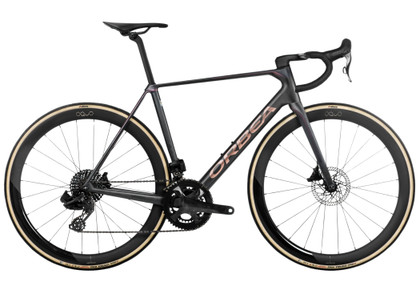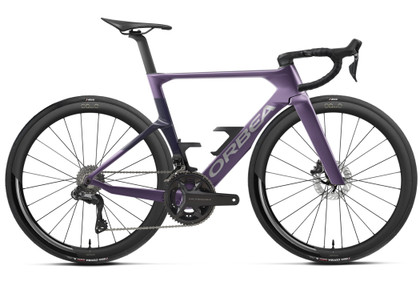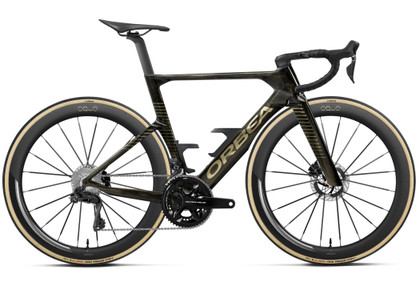


Nothing compares to the sensation of speed offered by a true aerodynamic bike. The Orbea Orca Aero M22 LTD 2027 Bike featured here at Escapa has been developed to transform every pedal stroke into pure performance, allowing you to make the most of every watt generated on the bike.
Its design goes far beyond traditional aerodynamics. Instead of focusing solely on wind tunnel data, Orbea has worked to optimize the interaction between rider and bike, creating a more efficient package under real-world racing and training conditions.
The result is a faster, more efficient, and better-integrated bike, capable of delivering a tangible advantage when speed really matters. Thanks to this comprehensive approach, the new Orca Aero achieves a 21-watt improvement over the previous generation, making it one of the most advanced bikes for those seeking maximum performance on the road.
Aerodynamics Designed for the Real Road
When every aerodynamic detail has been perfected, true improvements don’t come from pursuing the same goals, but from adopting a new way of understanding speed. That’s why the new Orca Aero was developed with real-world riding conditions in mind—where crosswinds, shifts in airflow direction, and the rider’s position have a decisive impact on performance.
Beyond the figures obtained in the wind tunnel, Orbea has worked to optimize the aerodynamic performance of the bike-rider system in real-world racing and training situations. The result is consistent efficiency in any scenario, capable of maintaining speed and reducing effort when it matters most.
Thanks to this innovative approach, the Orca Aero turns every aerodynamic advantage into tangible performance on the road, offering a faster, more efficient, and more competitive experience on all types of routes.
Aerodynamics in Every Detail
Head Tube
The head tube has been designed to minimize the frontal area while retaining a standard fork, avoiding more complex or impractical solutions. This allows for a wider range of sizes, compliance with UCI regulations, and lower weight compared to more complex alternatives. This reduction in height is made possible by the lower position of the bottom bracket.
Fork
The fork’s shape is carefully designed to align with the down tube and promote a smooth transition of airflow even at different wind angles. This maintains aerodynamic efficiency even in crosswinds. Additionally, it preserves sufficient space for a wide variety of tires without resorting to oversized profiles that compromise performance.
Down Tube
A slightly wider down tube helps direct airflow efficiently across the frame’s larger surface area. Its design has been specifically optimized for wind angles between 5° and 20°, the most common in real-world crosswind conditions.
Bottom Bracket Keel
Building on the previous generation of the Orca Aero, we extended the keel located beneath the bottom bracket to enhance its aerodynamic contribution. This structure helps guide airflow through a key transition zone and reduces drag.
Seat Tube and Seatpost
Relocating the Di2 battery to the bottom of the frame allowed us to design sleeker profiles for both the seat tube and seatpost. This reduces aerodynamic drag compared to the previous generation while maintaining the structural efficiency of the assembly.
Seat stays
The lower union of the seatpost to the frame helps reduce weight, maintain high stiffness, and slightly improve vertical comfort.
Minimalist Rear Dropout Design
The new compact dropouts, developed around the UDH standard, reduce weight and improve integration. The Di2 cabling is completely hidden, enhancing the bike’s clean, uncluttered appearance. Proven Performance Aerodynamic development doesn’t end at the drawing board. Every improvement is tested and validated before becoming part of the final bike.
Validated in the Wind Tunnel
The improvements obtained through CFD simulations on the previous bike are subsequently verified in the wind tunnel using fairings. The repeatable and realistic conditions allow us to confirm that these gains translate into performance on the road.
High-Speed Efficiency Test
In this test, we measure the power required to maintain different constant speeds. Thanks to the controlled conditions of an indoor velodrome, aerodynamics is the only variable that changes, allowing us to quantify its impact in watts at different speeds.
More integration, more speed
The OC RA10 Carbon Cockpit stands out for its light weight and combines fully integrated cabling, ergonomic grips, and the stiffness needed for the most explosive efforts into a perfectly integrated package.
Integrated bottle cages
The new bottle cages have been positioned lower on the frame and carefully designed to integrate seamlessly, allowing air to flow smoothly around the down tube and seat tube.
Service Box
The integrated Service Box provides a dedicated space for carrying tools, inner tubes, and other essentials. In addition to being practical, it offers aerodynamic benefits thanks to a shape that follows the lines of the wheel and frame to create a continuous surface.
OC RA11 Aero Seatpost
A lightweight, aerodynamically profiled seatpost with a low-stack clamp designed to reduce drag. Its precise fit and compatibility with any saddle ensure a clean integration.
The Competitive Advantage
The Orca Aero frame has been developed around the Oquo wheel profile to optimize airflow around the bike and maximize aerodynamic efficiency.
Stability at Race Speeds
A stable bike is an efficient bike. A lower center of gravity, refined geometry, and an optimized riding position reduce unnecessary movement to better conserve energy and maintain speed more easily.
One of the lowest bottom brackets in its class lowers the center of gravity for a more stable ride. This lower position reduces lateral movement, promotes more precise tracking, and minimizes energy loss. It also reduces frontal wind exposure to improve aerodynamic efficiency.